Applied Mathematics
About Department
The department of Applied Mathematics is committed to provide high quality education in the field of Mathematics and its application through programmed teaching with the state of art implements.
It will not be an exaggeration to say that Mathematics is the heart and soul of engineering. No engineering can be complete without a sound grounding in Mathematics. The Department of Applied Mathematics has been commendably carrying out its task of imparting instructions in basic Mathematics courses in first & second year and then offering a number of electives to the senior students. These electives have been tailored keeping in mind the requirements of the present day.
Faculty Profile
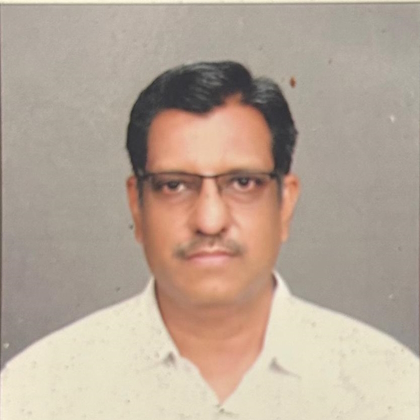
Dr. Satyaj Tiwari
Professor and Head
Regular
Qualification – M.Sc. PhD
Specialization – Opertor Theory
Year of Experience – 27 Yrs
Date of Joining – 06-03-2025
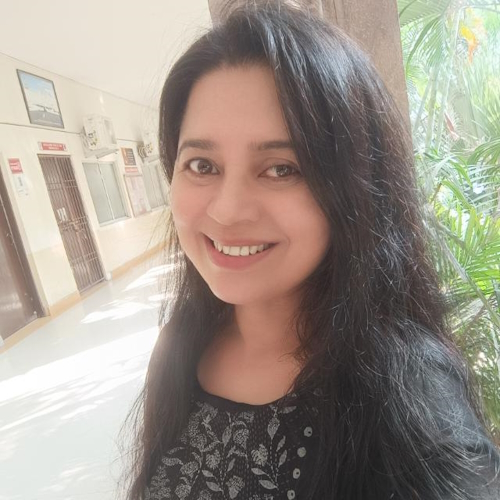
Dr. Pranjali Sharma
Associate Professor
Regular
Qualification – PhD, M.Sc, M.Phil
Specialization – Fuzzy logic , Metric spaces, Fixed point
Year of Experience – 24 Yrs
Date of Joining – 15-06-2010
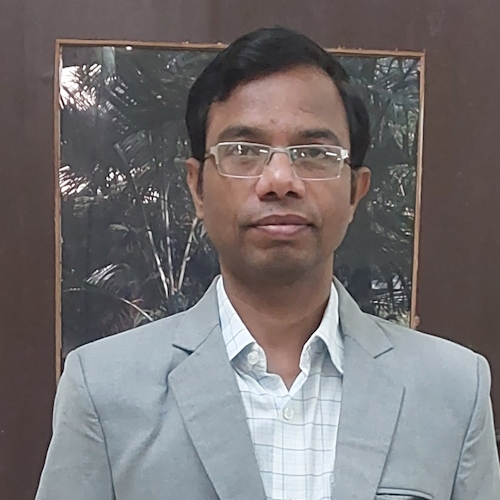
Dr. Manoj Kumar Dewangan
Associate Professor
Regular
Qualification – PhD, M.Sc
Specialization – Algebraic Hyper-Structures
Year of Experience – 25 Yrs
Date of Joining – 14-07-2018
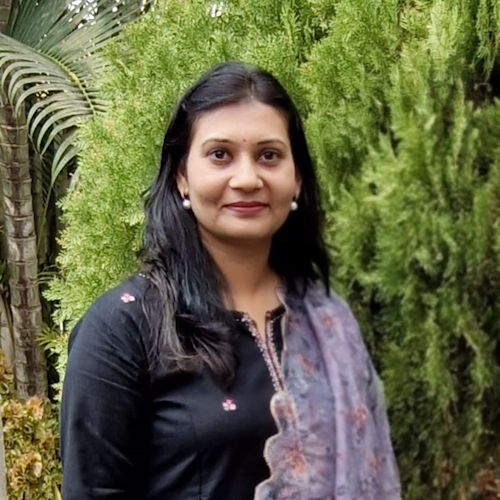
Mrs. Rashmi Verma
Assistant Professor
Regular
Qualification – PhD Pursuing, MSc
Specialization – Fixed point theory
Year of Experience – 15 Yrs
Date of Joining – 03-06-2014
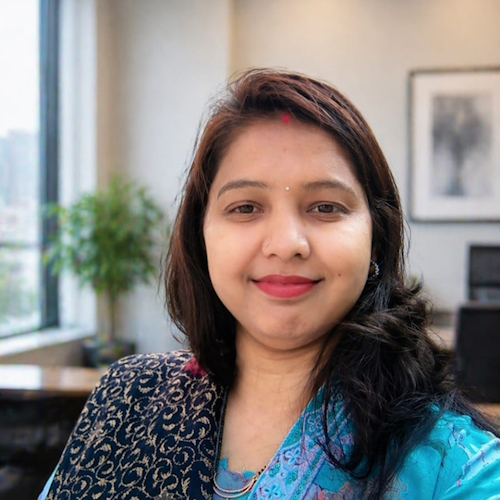
Mrs. Maheswari Sahu
Assistant Professor
Regular
Qualification – M.sc, M.Phil, PhD pursuing
Specialization – Information Theory and fuzzy logic
Year of Experience – 17 Yrs
Date of Joining – 03-06-2014
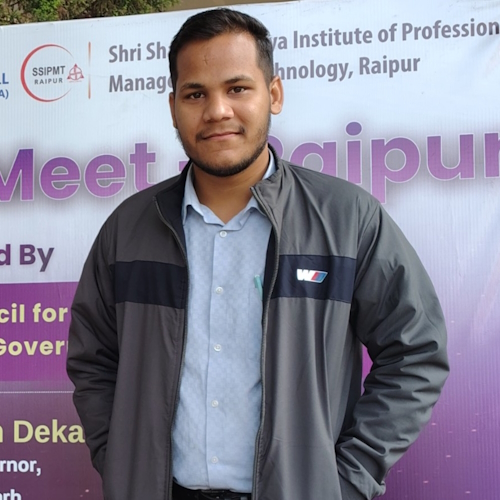
Mr. Lochan Pradhan
Assistant Professor
Regular
Qualification – M.Sc
Specialization – Mathematical Modeling
Year of Experience – 05 Yrs
Date of Joining – 06-08-2025
Subject: Engineering Mathematics II Code: 3000B02AT014
Course Outcomes
| CO1 | Implement the De Moivre’s theorem for finding roots of Complex numbers and use the Method of separation into real and imaginary parts in the study of complex numbers and Summation of series C+iS method. |
| CO2 | Use the concept of convergence and tool of power series in various problems of advanced Mathematics. |
| CO3 | Use the Multivariable Integral Calculus for finding Area and Volume and to employ the Beta and Gamma functions for evaluating improper finite integrals. |
| CO4 | Differentiate and Integrate Vector functions and apply Stoke’s, Gauss and Divergence theorem for easier evaluation. |
| CO5 | Fit Linear and Second order Parabolic curves to given set of data. And use Correlation and Regression for Interpolation or Extrapolation. |
Subject: Engineering Mathematics I Code: 3000A02AT014
Course Outcomes
| CO1 | Apply the concept of Rank of Matrices and Cayley-Hamilton Theorem. Problems on solution of a system of linear equations by matrix method. Implement the concept of Eigen values and Eigen vectors in engineering problems. |
| CO2 | Apply the method of Successive Differentiation for Expansion of functions and Tracing of simple curves. |
| CO3 | Solve the problems of Maxima& Minima of functions of two variables and use Jacobians in formulation of practical problems. |
| CO4 | Apply integration for Rectification, Quadrature and Volume of revolution and apply Differentiation under the integral sign to definite integrals. |
| CO5 | Solve Linear as well as Nonlinear Differential Equations of first order. Also, to solve Linear Differential Equations of Higher Order. |
Research
Academic Calendar
2025 - 26
2024 - 25
2023 - 24
2022 - 23
Applied Mathematics
Available Research Supervisors
- Dr. Pranjali Sharma
- Dr. Manoj Kumar Dewangan
List of Available Softwares
- Latex
- Matlab
- Turn it in
- Grammarly
Research Publications
| SCI | Scopus | UGC Care and Others |
|---|---|---|
| 02 | 14 | 42 |
Book Chapters
| Scopus /SCI | others |
|---|---|
| 01 | 04 |
Patents
| Granted | Published/Registered |
|---|---|
| 07 | 04 |
Conference
| National | International |
|---|---|
| 28 | 35 |
Sponsored Project - 01
Guest Lecture - 04
Scheme & Syllabus
Scheme
Syllabus
1st Semester
Applied Physics
About Department
The underlying purpose of Applied Physics Department is simply to impart quality education to the students and realise the fact that Physics is the father of all Science and Engineering. The department has laboratory equipped with modern experimental kits and computational facilities for general physics lab, modern physics lab and optics lab. The department has also set up an R&D lab with basic facilities for carrying out research activities in optical materials and devices
Major facilities in the departmental laboratory includes computerized double beam UV-VIS spectrophotometer, Hall effect measurement kit, composite piezo-electric oscillator, ultrasonic cleaner, kit for measuring band gap of a semiconductor using four probe method, triple distillation unit, experimental set up on photoconductivity etc. Faculty members of the department are actively engaged in research and project works.
Faculty Profile

Dr. Dhirendra Singh Kshatri
Professor
Regular
Qualification – Ph.D. (Physics), M.Sc. (Physics)
Specialization – Solid State of Physics, Luminescence
Year of Experience – 21 Yrs
Date of Joining – 13/06/2008
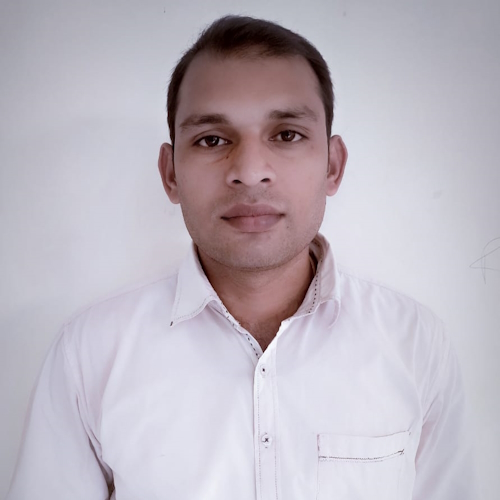
Dr. Pradeep Dewangan
Associate Professor
Regular
Qualification – Ph.D. (Physics), M.Sc. (Physics)
Specialization – Solid State of Physics, Luminescence
Year of Experience – 16 Yrs
Date of Joining – 01/07/2022
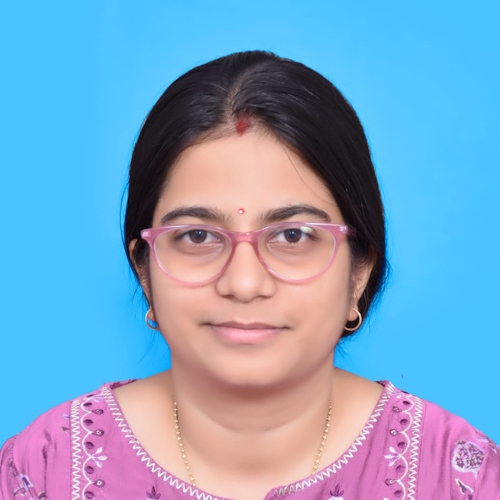
Dr. Sadhwi Suman Dash
Assistant Professor
Regular
Qualification – Ph.D. (Physics). M.Sc. (Applied Physics).
Specialization – Experimental Condensed Matter Physics, Magneto Electric Composites
Year of Experience – 06 Yrs
Date of Joining – 12/02/2026
Course Outcome - Physics-I
| C108.1 | Understand the concepts of mechanics of solids, standards, units, conservative and non-conservative forces. |
| C108.2 | Understand the concepts of interference, diffraction, Newton’s rings, and interference by division of wave front using Fresnel’s bi prism and diffraction grating. |
| C108.3 | Understand the behavior of electrostatic and electromagnetic laws. |
| C108.4 | Understand the basic concepts of quantum mechanics and one dimensional problems. |
| C108.5 | Understand the principle of semiconductor physics and their applications. |
| C108.6 | Understand the concepts of electronic materials, classification of materials and band gape. |
| C108.7 | Understand the principle of temporal and spatial coherence of lasers, working and characteristics of Ruby, He-Ne & Nd -YAG lasers, optical fiber, the concepts of holography and propagation of light in an optical fibers through acceptance angle and numerical aperture. |
Course Outcome - Applied Physics (New)
| C108.1 | Understand the concepts of transformation of time and space, time dilation, length contraction, relativistic mass, equivalence of mass and energy, energy and momentum in the context of relativity theory. |
| C108.2 | Understand the nature of elementary particles, controlled and uncontrolled chain reaction, nuclear fission and nuclear reactors and nuclear fusion. |
| C108.3 | Understand the behavior of charged particles in electric and magnetic fields, and the working of Aston and Bainbridge mass spectrograph. |
| C108.4 | Understand how ultrasonic waves can be generated by magnetostriction and Piezo-electric oscillators, and the engineering applications of ultrasonic waves. |
| C108.5 | Understand the requirements of an acoustically good hall in terms of reverberation time, absorption coefficient, and the means of meeting those requirements. |
| C108.6 | Understand the concepts of interference, diffraction, Newton’s rings, and interference by division of wave front using Fresnel’s bi prism and diffraction grating |
| C108.7 | Understand the principle of temporal and spatial coherence of lasers, working and characteristics of Ruby, He-Ne and Nd -YAG lasers, optical fiber, the concepts of holography and propagation of light in optical fibers through acceptance angle and numerical aperture. |
Solid State Physics Research Laboratory
| S.N. | Name of Equipments | Quantity |
|---|---|---|
| 1 | Electronic Balance | 01 |
| 2 | KBr Pressure Machine | 01 |
| 3 | Magnetic Stirrer | 01 |
| 4 | UV Expose Machine | 01 |
| 5 | High Temperature Furnace (1450 o C) | 02 |
| 6 | Film Making Unit | 01 |
| 7 | Battery Tester | 01 |
| 8 | KBr Die | 01 |
| 9 | Computer with internet facility | 03 |
| 10 | Printer | 01 |
Research
Applied Chemistry
About Department
The sole aim of this department is to inculcate a strong desire among the students to know the chemistry of everything and to apply the knowledge in the real world for the betterment of mankind. The usefulness of Chemistry when applied to solve problems in engineering, agriculture, medicine and in the Industry in particular, is one of the main reasons for including chemistry as a full fledged subject with practical in the curriculum of Engineering. With a view to impart knowledge and support the Institute academically, the most vibrant and active department was established along with the inception of SSIPMT, Raipur.
The department has also set up an R&D lab with basic facilities for carrying out research activities in the field of Analytical chemistry & Environment chemistry.Major facilities in the departmental laboratory includes , UV-VIS spectrophotometer,Flame photometer,Water testing kit and water distillation plant .
Department Vision
- The Chemistry department wants to become one of the leading technical institutes in the country abroad, providing excellent professional education and fostering value- based research innovations and patents.
- It wants to create an environment where faculty, staff, and students can work on research that meets societal needs.
Department Mission
- Our goal is to foster a dynamic, inclusive environment that promotes scientific excellence and solves global problems.
- With innovative research, interdisciplinary collaboration, and the development of sustainable technologies, our institute offers a technically advanced education in chemistry.
Faculty Profile
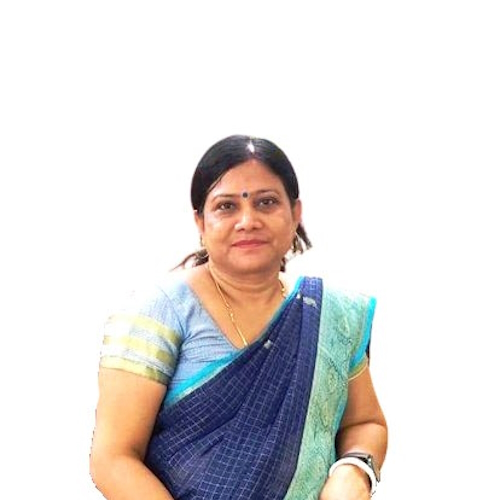
Dr. Supriya Biswas
Professor
Regular
Qualification – PhD
Specialization – Chemical Kinetics, Environmental Chemistry
Year of Experience – 26 Yrs
Date of Joining – 03-06-2024
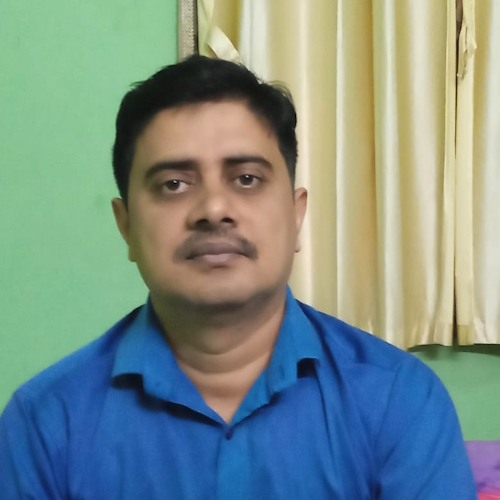
Dr. Rakesh Singh Dhundhel
Associate Professor
Regular
Qualification – PhD
Specialization – Analytical, Environmental Chemistry
Year of Experience – 19 Yrs
Date of Joining – 06-07-2010
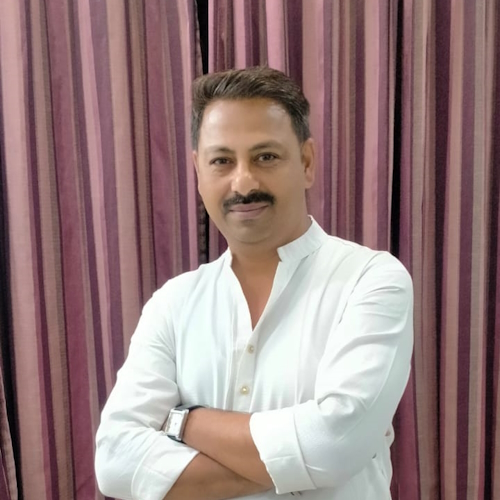
Dr. Vipin Kumar Soni
Assistant Professor
Regular
Qualification – PhD
Specialization – Analytical, Environmental Chemistry
Year of Experience – 16 Yrs
Date of Joining – 25-10-2022
Subject: Chemistry - I
Course Outcomes
| CO1 | Understand the microscopic chemistry in terms of atomic and molecular orbital’s and intermolecular forces. |
| CO2 | Understand the concepts of ligand field theory and measures crystal field stabilization energy |
| CO3 | Distinguish the ranges of the electromagnetic spectrum used for exciting different molecular energy levels in various spectroscopic techniques. |
| CO4 | Rationalise bulk properties and processes using thermodynamic considerations |
| CO5 | Rationalise periodic properties such as ionisation potential, electro negativity, Oxidation states. |
| CO6 | Understand the mechanisms of chemical reactions that are used in the synthesis of molecules. |
Environmental Chemistry
Course Outcomes
| CO1 | Awareness how the human activity affects air quality and the ability to assess the impact. |
| CO2 | Ability to classify and evaluate water and sol pollutants and apply numerical techniques for analyzing water quality parameters. |
| CO3 | Critically analyze the complexities of industrial pollutant and evaluate solution for mitigation. |
| CO4 | Proficiency in using various methods and instruments o to measure environmental parameter. |
| CO5 | Integrate knowledge from diversified case studies and understanding various environmental challenges. |
List of Experiment
Choices of 8-9 experiments from the following:
- Determination of alkalinity in water sample.
- Determination of hardness in water sample.
- Determination of chloride in water sample
- Determination of dissolved oxygen by DO meter.
- Determination of pH using pH meter.
- Determination Na & K using Flame Photometer.
- Spectrophotometric determination of organic/inorganic
- Determination of conductivity and TDS by water testing
- Collection of particulate by High Volume
- Determination of COD in water
- Determination of BOD in water
- Microbiological
List of Equipment
| S.No | Name of the Equipment | Quantity |
|---|---|---|
| 1 | Bomb calorimeter | 1 |
| 2 | Oxygen cylinder complete set | 1 |
| 3 | Digital beckmann thermometer | 1 |
| 4 | Nickel crucible | 1 |
| 5 | Battery 6v | 1 |
| 6 | Abel's flash point apparatus | 1 |
| 7 | Pensky martin fire and flash point apparatus | 1 |
| 8 | Chemical balance | 1 |
| 9 | Physical balance | 1 |
| 10 | Weight box | 1 |
| 11 | Digital electronic balance | 1 |
| 12 | Spectrophotometer Digital (Systronic) | 1 |
| 13 | Conductometer | 1 |
| 14 | Flame Photometer | 1 |
| 15 | Water Testing Kit | 1 |
| 16 | Dissolved Oxygen Kit | 1 |
| 17 | BOD Incubator | 1 |
| 18 | TDS Meter | 1 |
| 19 | Refrigerator | 1 |
Applied Chemistry
Available Research Supervisors
- Dr. Supriya Biswas (Professor & Head, Department of Chemistry, SSIPMT, Raipur)
- Dr. Rakesh singh Dhundhel (Associate Professor, Department of Chemistry, SSIPMT, Raipur)
- Dr. Vipin Kumar Soni (Assistant Professor, Department of Chemistry, SSIPMT, Raipur)
List of Available Software
- Chemsketch
- i-Thenticate (Plagiarism Check)
Sponsored Projects
Grants received from Government and non-governmental agencies for research projects / endowments in the institution (INR in Lakhs)
| S.No. | Name of the research project/ endowment | Name of the Principal Investigator/Co-investigator | Department of Principal Investigator/Co-investigator | Year of Award | Amount Sanctioned | Duration of the project | Name of the Funding Agency | Type (Government/non-Government) |
|---|---|---|---|---|---|---|---|---|
| 1 | Determination of Paraquat pesticides in vegetable and water sample using silver nano particles at Raipur District. | Dr. Rakesh Singh Dhundhel | First Year | 2019-20 | 1.50 | 1 Year | TEQIP III | Government |
| 2 | Determination of organophosphorous pesticides in vegetable and water samples at Abhanpur area | Dr. Rakesh Singh Dhundhel | First Year | 2019-20 | 1.50 | 1 Year | TEQIP III | Government |
| 3 | Syrthesis Characterization & bactericidal activity ofphosphate ester having C-N-P linkage | Dr. Jaya Singh | First Year | 2019-20 | 2.00 | 1 year | TEQIP III | Government |
Humanities
About Department
At SSIPMT Raipur, the Department of Humanities plays a vital role in shaping the personality and perspectives of budding engineers. We go beyond technical education to nurture essential life skills that empower students to thrive both personally and professionally.
Our offerings include Professional Communication Skills, Soft Skills, and Personality Development, designed to build confidence, leadership, and workplace readiness. Rooted in our rich heritage, we also incorporate the Foundation Course on Ancient Indian Knowledge Systems, Indian Culture, and Constitution, and Value Education to develop socially responsible and culturally aware individuals. Health, Hygiene, Sports and Yoga, and Social Service/Community Services are also emphasised to promote overall well-being. The department houses a state-of-the-art English Language Lab with a subscription to the EWL – William Wordsworth English Language Lab Software, which offers immersive and interactive language-learning experiences.
SSIPMT proudly hosts the Spellbinders Toastmasters International Club, chartered in 2018, as a platform dedicated to empowering students to develop communication and leadership skills. Through a welcoming, high-quality, experiential learning environment, members engage in public speaking, team-building, and self-development activities that foster greater self-confidence, personal growth, and effective leadership. Over the years, many students who have been part of this club have gone on to secure excellent positions in their professional careers, reflecting the lasting impact of the club’s learning experience.
The Department of Humanities also holds a strategic MoU with ISPELL (Indian Society for the Promotion of English Language and Literature). We are a recognised Cambridge Centre of Excellence, offering globally benchmarked language development programs. Additionally, the department prepares students for placements and campus interviews through targeted training, mock sessions, and beyond-the-curriculum courses, ensuring their holistic development and career readiness.
At SSIPMT, we aim to shape not just capable engineers but compassionate, ethical, and future-ready individuals prepared to lead in a dynamic global landscape.
Department Vision
- To foster academic excellence in English and Communication across disciplines while strengthening effective communication skills, and to inculcate human and professional values that enhance career readiness and nurture creative potential.
Department Mission
| M1 | To strengthen proficiency in the English language and communication through effective, learner-centric pedagogy. |
| M2 | To develop soft skills, personality, and interpersonal competence essential for academic and professional success. |
| M3 | To inculcate ethical, human, and professional values through language, literature, and communication studies. |
| M4 | To enhance employability by nurturing critical thinking, creativity, and industry-oriented communication skills. |
Faculty Profile
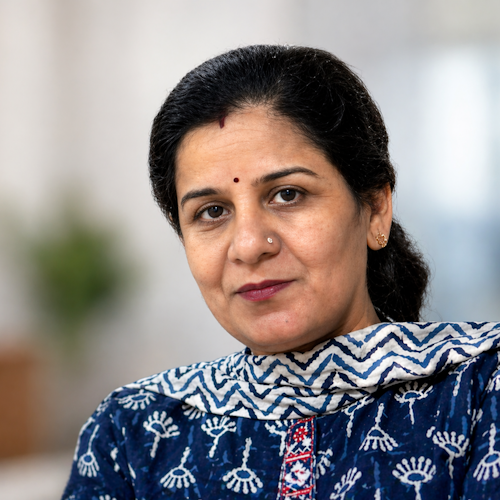
Dr. Seema Arora
Associate Professor
Regular
Qualification – PhD, M.A. (English), B.Ed.
Specialization – Indian English Literature
Year of Experience – 31 Yrs
Date of Joining – 01/06/2010
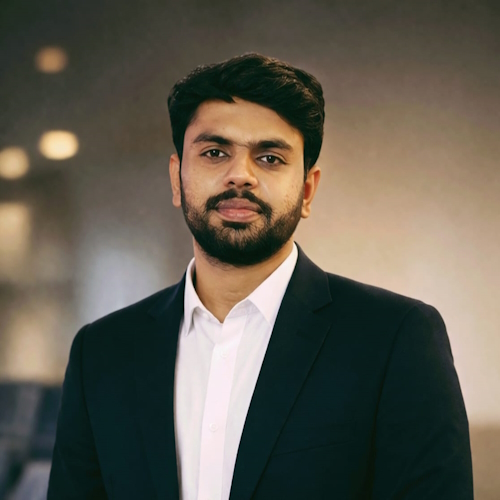
Mr Harsh Mishra
Assistant Professor
Regular
Qualification – M.A. (English)
Specialization – Cultural Studies, Literary Criticism and Theory
Year of Experience – 04 Yrs
Date of Joining – 07/10/2025
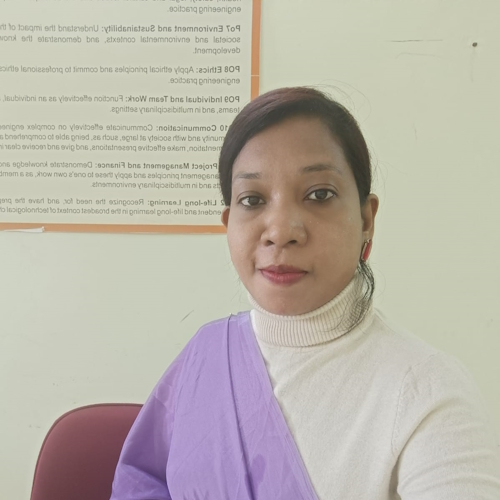
Miss Margaret Minz
Assistant Professor
Regular
Qualification – M. Phil, M.A. (English), CGSET
Specialization – Food Studies
Year of Experience – 04 Yrs
Date of Joining – 20/08/2024
Course Outcomes
English
Course Code-A000214(046)
On successful completion of the course, students will be able to:
| C109.1 | Recall and demonstrate the use of essential vocabulary, phonetics, and grammar concepts, including root words, synonyms, antonyms, homophones, and basic sentence structures. |
| C109.2 | Interpret and apply fundamental rules of grammar, sentence construction, and punctuation to produce coherent and precise writing. |
| C109.3 | Identify and correct common errors in writing related to syntax, agreement, modifiers, and spelling to enhance clarity and accuracy in communication. |
| C109.4 | Develop and compose various forms of academic and professional writing, such as essays, précis, business letters, reports, and emails, following standard formats and conventions. |
| C109.5 | Evaluate and practice effective communication and listening strategies, including note-taking, to improve academic and workplace interactions. |
List of Activities for English Language Lab
UNIT – VI Oral Communication (This unit involves interactive practice sessions in the Language Lab)
Course Objective: To acquire basic proficiency in English, including reading and listening comprehension, writing and speaking skills.
| S.No | Experiment No. | Name of Activities |
|---|---|---|
| 1 | 6.1 | Listening Comprehension |
| 2 | 6.2 | Pronunciation, Intonation, Stress and Rhythm |
| 3 | 6.3 | Common Everyday Situations: Conversations and Dialogues |
| 4 | 6.4 | Communication at Workplace |
| 5 | 6.5 | Interviews |
| 6 | 6.6 | Formal Presentations |
Course Outcomes
English Language Lab
Course Code: A000225(046)
On successful completion of the course, students will be able to:
| CO1 | Develop effective listening comprehension skills to understand spoken English in academic and real-life contexts through structured audio-based activities. |
| CO2 | Demonstrate accurate pronunciation, intonation, stress, and rhythm to enhance clarity and fluency in spoken English. |
| CO3 | Apply appropriate speaking and conversational skills in everyday situations through dialogues and interactive communication tasks. |
| CO4 | Exhibit professional communication skills in workplace interactions and interviews using appropriate language and etiquette. |
| CO5 | Integrate listening, speaking, reading, and writing skills to prepare and deliver structured formal presentations with clarity and confidence. |
Photos of English Language Lab


Course Outcomes
Professional Communication Skills
Course Code: 3000A05DT046
On successful completion of the course, students will be able to:
| CO1 | Demonstrate a better understanding of the communication process by identifying, explaining, and applying current communication theories. |
| CO2 | Develop clear and error-free language proficiency to communicate fluently in English. |
| CO3 | Listen, read, comprehend, and synthesise information from different sources and respond appropriately. |
| CO4 | Learn the various oral communication situations to elicit desired results. |
| CO5 | Understand and appropriately apply modes of expression in written communication and develop the fundamental skills and techniques in drafting effective business documents and research papers. |
Course Outcomes
Foundation Course on Ancient Indian Knowledge Systems
Course Code: 3000A06ET046
On successful completion of the course, the students will be able to:
| CO1 | Explain the concept, importance, and foundational literature of the Indian Knowledge System (IKS), including its educational traditions and philosophical background. |
| CO2 | Describe the foundational scientific concepts in IKS, including Indian mathematics, contributions of mathematicians, number systems, and traditional units of measurement. |
| CO3 | Analyze the contributions of Indian knowledge traditions in the fields of science, engineering, and technology, including metallurgy, architecture, water management, and related heritage practices. |
| CO4 | Discuss the principles of Ayurveda and Yoga in the Indian Knowledge System and their relevance to health, wellness, psychology, and holistic well-being. |
| CO5 | Evaluate the relevance and applications of the Indian Knowledge System in contemporary society by integrating knowledge from its philosophical, scientific, technological, and wellness traditions. |
Course Outcomes
Indian Culture and Constitution
Course Code: 3000B05ET046
On successful completion of the course, students will be able to:
| CO1 | Explain the meaning, concepts, and elements of culture, including traditional and modern perspectives, historiographical approaches, and the relationship between culture and civilization in the Indian context. |
| CO2 | Describe the major sources for the study of Indian culture, including archaeological remains, monuments, numismatics, epigraphy, literary sources, oral traditions, and archival records. |
| CO3 | Analyze the key features of the Indian Constitution, including its historical background, Preamble, citizenship, amendment process, Fundamental Rights, Fundamental Duties, and Directive Principles of State Policy. |
| CO4 | Discuss the structure and functions of the Union and State governments, including the roles and powers of the President, Prime Minister, Parliament, Governor, Chief Minister, State Legislature, and High Court. |
| CO5 | Evaluate the significance of constitutional values, governance structures, and recent constitutional trends in India, including electoral reforms and the Panchayati Raj system, in strengthening democratic institutions. |
Mechanical Engineering
About Department
Mechanical Engineering is one of the broad based and oldest branches of engineering encompassing areas of materials, machines, energy, fluid, design and manufacturing. Mechanical engineers design machines and mechanical systems, engines, motor vehicles, aircrafts, satellites, power plants, building energy systems, manufacturing systems, robots, control systems, medical equipment, and consumer products.
Course Outcomes
Engineering Graphics Lab
Subject Code : 3000B03AL037
| CO-1 | Describe the basic concepts of drafting software and able to crate drawing using software tools. |
| CO-2 | Modify the geometry, dimension the views and create drawing using layer command. |
| CO-3 | Draw scale, and engineering curves using CAD software. |
| CO-4 | Draw orthographic projection and develop solids using drafting software. |
| CO-5 | Convert orthographic view into isometric view and vice-versa using drafting software. |
Engineering Graphics and Design Lab
Subject Code : A000114(037)
| CO-1 | Define key concepts and explain the significance of engineering drawing principles, including types of lines, lettering styles, dimensioning methods, and scale usage. |
| CO-2 | Interpret and construct orthographic, isometric, and projection drawings using first-angle and third-angle projection methods |
| CO-3 | Identify the components of CAD software, use of coordinate systems and apply basic system settings (such as snap, grid, ortho, polar, layers, blocks) for initiating digital drafting. |
| CO-4 | Use 2D CAD tools to draw, edit, and annotate engineering components, and analyze drawings for accuracy and compliance with drawing standards. |
| CO-5 | Develop and modify 3D models using CAD software by applying solid modeling and editing tools to create engineering designs |
Smart manufacturing
Subject Code: 3037B01CT037
| CO-1 | Define conventional manufacturing and explain the concept of smart manufacturing |
| CO-2 | Discuss smart manufacturing tools. |
| CO-3 | Describe additive manufacturing and smart cutting technologies. |
| CO-4 | Discuss Computer Integrated Manufacturing, Automated Process Planning & Numerical Control Machine Tool |
| CO-4 | Discuss principles of measuring devices, gauges and their uses. |
| CO-5 | Explain IoT and its applications. |
Fundamental of Mechanical Engineering
Subject Code: 3037A01CT037
| CO-1 | Demonstrate an understanding of basic concept of thermodynamics and apply it to analyze thermodynamics system. |
| CO-2 | Describe basic air standard cycles and working principle of IC Engine. |
| CO-3 | Describe the concept of EV and HEV and its terminology, power flow control. |
| CO-4 | Analyse the concept of moment of inertia, product of inertia, its principles and determination by direct integration including computation of the moment of inertia, comprising of rectangle, circle, semicircle and triangle. |
| CO-4 | Discuss principles of measuring devices, gauges and their uses. |
| CO-5 | Discuss pressure, flow, and temperature measurement devices. |
Civil Engineering
About Department
Civil Engineering is one of the most diverse professions. Civil Engineers are needed to design and create new structures and also, for their lifelong maintenance. They have the biggest opportunity to serve the society. They have the privilege to provide a strong foundation for the overall development of the country.
Course Outcome - Basic Civil Engineering
| C109.1 | Understand the concept of building materials like bricks, cement, stone and steel and their uses. |
| C109.2 | Understand the properties of mortar, concrete, aggregates along with their uses and the drawing of building plans, their cross-sections and identification of conventional symbols. |
| C109.3 | Understand the basic concept of surveying, their types and equipments used. |
| C109.4 | Understand the basic concept of leveling, their types, equipments used and concept of contouring and its characteristics. |
| C109.5 | Understand the various types of foundations along with different bearing capacity of soil including concept of load bearing and framed structure. |
Computer Science Engineering
About Department
The department of Computer Science & Engineering presently offers undergraduate (BE) study program. The curriculum of Computer Science & Engineering covers all software & related hardware part of computing as per Chhattisgarh Swami Vivekananda Technical University, Bhilai (CSVTU) syllabus with its cohesive team of faculty members.
The institute develops professionals who have good knowledge of latest technology which are viable in the market and necessary for the basic concept and advance research such as Programming, Computer Network, Artificial Intelligence, Cryptography, Compiler Design, Computer Graphics, Data Mining & Ware Housing etc. Computer Science & and Engineering Department has a unique blend of faculty and facilities that offers students a rare opportunity to do research and learn Computer Science in new collaborative ways.
The Department of Computer Science and Engineering was started in the year 2008 and has a set of well qualified and experienced faculty with state of the art laboratories to meet the quality education required for present challenging social and industrial needs. The department takes initiative in conducting co-curricular and extracurricular activities along with the academics. Core facilities such as fully fledged common computer center, internet lab, seminar halls, library, and audio & video exhibits are available in the department to give the academic program the required thrust.
Course Outcomes
Fundamentals of Computers & IT Lab
Subject Code: 3000A02CL022
| 1 | Students will gain a solid understanding of basic computer hardware, software, and operating systems. |
| 2 | Students will become proficient in using MS Office tools for word processing, spreadsheets, and presentations. |
| 3 | Students will develop the skills to write, document, and present their work effectively during project development. |
| 4 | Students will build a strong foundation in programming and computational thinking for solving real-world problems. |
| 5 | Students will gain awareness of and familiarity with online applications and services related to Digital India initiatives. |
Python for Problem Solving & Logic Building
Subject Code: 3022A01CT022
| 1 | Develop algorithmic solutions to simple computational problems. |
| 2 | Develop and execute simple Python programs. |
| 3 | Write simple Python programs using conditionals and looping for solving problems. |
| 4 | Decompose a Python program into functions. |
| 5 | Read and write data from/to files in Python programs. |
Python for Problem Solving & Logic Building Lab
Subject Code: 3022A01CL022
| 1 | Proficient in understanding Python syntax and semantics, as well as creating arrays and functions. |
| 2 | Capable of learning and working with various data types in Python, including lists and dictionaries. |
| 3 | Skilled in executing programs using loops and control statements. |
| 4 | Proficient in learning decision-making concepts and implementing functions in Python. |
| 5 | Skilled in handling files and managing exceptions in Python |
Concept of Programming Language
Subject Code: 3000B04DT022
| 1 | Explain the process of problem solving using computer |
| 2 | Design an algorithmic solution for a given problem |
| 3 | Write a maintainable C program for a given algorithm. |
| 4 | Trace the given C program manually. |
| 5 | Able to write C program for simple applications of real life using structures and files. |
Concept of Programming Language Lab
Subject Code: 3000B02DL022
| 1 | Explain the process of problem solving using computer |
| 2 | Design an algorithmic solution for a given problem |
| 3 | Write a maintainable C program for a given algorithm. |
| 4 | Trace the given C program manually. |
| 5 | Able to write C program for simple applications of real life using structures and files. |
Computer Networking & Security Surveillance
Subject Code: 3022B01CT022
| 1 | Understand Networking Fundamentals |
| 2 | Integrate Networking in Surveillance Systems |
| 3 | Implement Secure Networking Practices |
| 4 | Address Ethical and Privacy Concerns |
| 5 | Design and Deploy Surveillance Networks |
Computer Networking & Security Surveillance Lab
Subject Code: 3022B01CL022
| 1 | Understand Security Principles: Explain the fundamental concepts of network security, surveillance methodologies, and threat landscapes. |
| 2 | Deploy Surveillance Tools: Utilize modern tools and technologies for network monitoring, intrusion detection, and threat analysis. |
| 3 | Implement Security Policies: Design and implement effective security policies and practices to safeguard organizational networks. |
| 4 | Understand Legal and Ethical Aspects: Demonstrate awareness of legal, ethical, and regulatory frameworks related to security surveillance and data privacy. |
| 5 | Integrate Security Solutions: Integrate |
Electronics & Telecommunication
About Department
Electronics & Telecommunication is a branch dealing with the design of electronic devices like chips, microprocessors, VLSI design, embedded systems etc. It also includes communication part which primarily focuses on the sharing and transfer of information from one place to another.
All the companies manufacturing local wrist watches, washing machines, refrigerators, LED TVs, huge turbines, smart phones, marine ships, train, airplanes and all chip designing companies, automobile manufacturing giants recruit Electronics and Telecommunication graduates.
Course Outcomes
Course Name : Basic Electrical Engineering
Course Code : A000113(024)
On successful completion of the course, the students will be able:
| C103.1 | Describe the basic concepts of DC networks and apply them to analyze simple electrical circuits, analyze the electrical and magnetic quantities and Apply the knowledge of basic laws to electric and magnetic circuits. |
| C103.2 | Analyse the series, parallel and series-parallel combined ac circuits. |
| C103.3 | Discuss the working principle and construction of a transformer, and analyze its losses. |
| C103.4 | Discuses the working and characteristics of diodes, and apply their principles to various applications. |
| C103.5 | Explain the construction, working, and characteristics of a transistor, and apply this knowledge to its various applications. |
Course Outcomes
Course Name : Basic Electrical Engineering
Course Code : 3000A05AT024
On successful completion of the course, the students will be able:
| CO1 | Describe the basic concepts of DC networks and apply them to analyze simple electrical circuits. |
| CO2 | Analyze and solve complex AC circuits using suitable mathematical and analytical techniques. |
| CO3 | Construct and interpret phasor diagrams for balanced three-phase star and delta connected systems. |
| CO4 | Analyze and solve series and parallel magnetic circuits. |
| CO5 | Explain the basic operating principle, types, operating performance of Transformers. |