About Artificial Intelligence & Machine Learning Department
The department of Artificial Intelligence & Machine Learning offers 4-year full time under graduate B. Tech. degree in Computer Science with specialization in Artificial Intelligence & Machine Learning.
List of Programs Offered
The Department of Computer Science & Enginering (AI & ML) offers the following academic programs:
-
Bachelor of Technology (B. Tech.) AI & ML
Intake - 60
Importance of AI & ML course
Artificial Intelligence prepares professionals who develop intelligent machines and systems, performing tasks that require human ingenuity, such as playing games or mastering the natural language. Popular examples of Artificial Intelligence (AI) include computers playing chess or self-driving cars. They rely on in-depth learning and natural language analysis to analyze large amounts of data, identify patterns, and make predictions and decisions based on relevant information.
Machine Learning (ML) is a very special sub discipline for Artificial Intelligence. Machine learning teaches students how to use algorithms and mathematical models to create computer systems that they can read for themselves. A good example of a machine learning program (ML) is image recognition software used by companies such as Google or Apple. The program analyzes the contents of the images and divides them into different categories (eg location, title, color).
HOD Message
Welcome to the Department of Artificial Intelligence & Machine Learning. It is my privilege to introduce you to a vibrant academic community dedicated to advancing the frontiers of intelligent technologies and nurturing the next generation of AI innovators.
With a team of highly qualified faculty members, modern laboratories, and a curriculum mapped as per guidelines, we ensure that our students receive a holistic education. We emphasize outcome-based learning, where every course is carefully designed to meet specific Course Outcomes (COs) and contribute to broader Program Outcomes (POs). This structured approach not only strengthens academic rigour but also prepares our graduates for diverse career paths in industry, research, and entrepreneurship.
Artificial Intelligence and Machine Learning have fundamentally transformed how we live, work, and solve complex global challenges. Recognizing this paradigm shift, our department offers specialized B.Tech programs in Artificial Intelligence & Machine Learning that seamlessly integrate core computer science principles with advanced AI/ML/DL coursework. Our curriculum is continuously updated to reflect industry demands and emerging research trends, ensuring our students remain at the cutting edge.
Our Vision is to emerge as a recognized center of excellence in AI education, research, and ethical innovation. Our Mission is to foster an intellectually stimulating environment that promotes analytical thinking, hands-on experimentation, interdisciplinary collaboration, and responsible AI development.
The department is powered by a team of highly qualified and research-active faculty members specializing in deep learning, computer vision, natural language processing, generative AI, robotics, and AI ethics. We support our academic programs with state-of the-art laboratories, high-performance computing infrastructure, and strategic MoUs with leading tech companies, research labs, and startup incubators.
Beyond academics, we emphasize holistic student development through hackathons, technical symposiums, industry internships, open-source contributions, and international conferences. Our strong industry connect and placement track record ensure that graduates are well-prepared to lead in global tech enterprises, research institutions, and entrepreneurial ventures.
As we step into an era where AI will shape every sector of society, we remain committed to academic rigor, innovation, and societal impact. I warmly invite prospective students, researchers, industry partners, and alumni to engage with us and be part of this transformative journey.
Together, let’s engineer intelligent solutions for a smarter tomorrow.
Faculty Profile

Dr. Anjali Chandra
Head of Department
Regular
Qualification – M.Tech, Ph.D.
Specialization – Computer Technology
Year of Experience – 24 Yrs
Date of Joining – 01/12/2023

Mr. Vineet Kumar Vashishtha
Professor
Regular
Qualification – M.Tech
Specialization – Machine Learning
Year of Experience – 19 Yrs
Date of Joining – 14/09/2024

Mr. Prabhakar Sharma
Assistant Professor
Regular
Qualification – M.Tech
Specialization – Data Science
Year of Experience – 16 Yrs
Date of Joining – 20/03/2023

Mrs. Rekha Awasthi
Assistant Professor
Regular
Qualification – M.Tech
Specialization – Computer Technology
Year of Experience – 06 Yrs
Date of Joining – 16/10/2024

Ms. Liza Patel
Assistant Professor
Regular
Qualification – M.Tech
Specialization – Computer Technology
Year of Experience – 01 Yrs
Date of Joining – 03/02/2025

Ms. Lilima Jain
Assistant Professor
Regular
Qualification – Ph.D
Specialization – Cyber Security
Year of Experience – 0.8 Yrs
Date of Joining – 11/08/2025

Ms. Rashmi Banchhor
Lecturer
Regular
Qualification – M.Tech
Specialization – Computer Technology
Year of Experience – 01 Yrs
Date of Joining – 25/09/2024
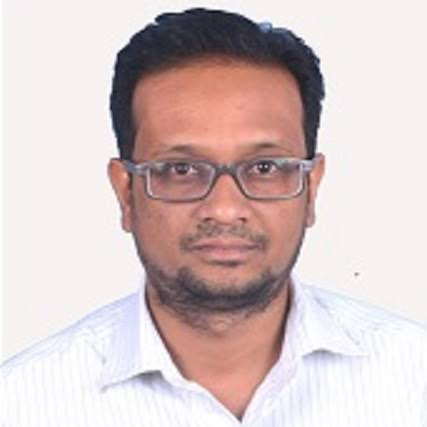
Mr. Narendra Kumar Dewangan
Assistant Professor
Regular
Qualification – M.Tech(CSE)
Specialization – Computer Vision, Object Oriented Programming
Year of Experience – 20 Yrs
Date of Joining – 02/01/2023
Department Vision
To produce competent professional graduates grounded in ethical values by imparting application oriented AIML education.
Department Mission
| M1 | To impart AIML based quality education align with effective project-based teaching & learning process. |
| M2 | To develop effective infrastructure by fostering innovative knowledge and ideas in the field of AIML |
| M3 | To groom competent professionals by imparting knowledge of AIML based industry oriented education/courses |
List of PO's
| PO1 Engineering Knowledge |
Apply the knowledge of mathematics, science, engineering fundamentals, and an engineering specialization to the solution of complex engineering problems. |
| PO2 Problem Analysis |
Identify, formulate, review research literature, and analyze complex engineering problems reaching substantiated conclusions using first principles of mathematics, natural sciences, and engineering sciences. |
| PO3 Design/Development of Solutions |
Design solutions for complex engineering problems and design system components or processes that meet the specified needs with appropriate consideration for the public health and safety, and the cultural, societal, and environmental considerations. |
| PO4 Conduct Investigations of Complex Problems |
Use research-based knowledge and research methods including design of experiments, analysis and interpretation of data, and synthesis of the information to provide valid conclusions. |
| PO5 Modern Tool Usage |
Create, select, and apply appropriate techniques, resources, and modern engineering and IT tools including prediction and modeling to complex engineering activities with an understanding of the limitations. |
| PO6 Engineer and Society |
Apply reasoning informed by the contextual knowledge to assess societal, health, safety, legal and cultural issues and the consequent responsibilities relevant to the professional engineering practice. |
| PO7 Environment and Sustainability |
Understand the impact of the professional engineering solutions in societal and environmental contexts, and demonstrate the knowledge of, and need for sustainable development. |
| PO8 Ethics |
Apply ethical principles and commit to professional ethics and responsibilities and norms of the engineering practice. |
| PO9 Individual and Team Work |
Function effectively as an individual, and as a member or leader in diverse teams, and in multidisciplinary settings. |
| PO10 Communication |
Communicate effectively on complex engineering activities with the engineering community and with society at large, such as, being able to comprehend and write effective reports and design documentation, make effective presentations, and give and receive clear instructions. |
| PO11 Project Management and Finance |
Demonstrate knowledge and understanding of the engineering and management principles and apply these to one’s own work, as a member and leader in a team, to manage projects and in multidisciplinary environments. |
| PO12 Life-long Learning |
Recognize the need for, and have the preparation and ability to engage in independent and life-long learning in the broadest context of technological change. |
List of PSO's
| PSO1 | Ability to analyze and apply the knowledge of human cognition, Artificial Intelligence, Machine Learning and data engineering in terms of real-world problems to meet the challenges of the future. |
| PSO2 | Ability to develop computational knowledge and project development skills using innovative tools and techniques to solve problems in the areas related to Deep Learning, Machine learning, Natural Language Processing. |
| PSO3 | Ability to establish or lead a product development company and use the acquired knowledge to identify real-world problems. |
List of PEO's
| PEO1 | Graduates will have the ability to adapt, contribute and innovate new technologies and systems in the key domains of Artificial Intelligence and Machine Learning. |
| PEO2 | Graduates will be able to successfully pursue higher education in reputed institutions with AI Specialization. |
| PEO3 | Graduates will have the ability to explore research areas and produce outstanding contribution in various areas of Artificial Intelligence. |
| PEO4 | Graduates will be ethically and socially responsible solution providers and entrepreneurs in the field of Computer Science and Engineering with AI Specialization. |
Academic Calendar
Scheme & Syllabus
Scheme
Syllabus
Corporate Mentors
What is CSE (AI)?
CSE (AI) refers to the intersection of Computer Science and Engineering with the field of Artificial Intelligence. This involves the application of computer science and engineering principles and techniques to design and develop intelligent systems and software that can perform complex tasks requiring human-like intelligence.
CSE (AI) involves various subfields of AI, such as machine learning, natural language processing, computer vision, robotics, expert systems, and knowledge representation. It also encompasses the development of algorithms, architectures, and frameworks for designing and building intelligent systems, as well as the deployment and maintenance of these systems.
The goal of CSE (AI) is to create intelligent systems that can interact with the real world, make decisions, learn from experience, and adapt to new situations. These systems have many applications in various domains, including healthcare, finance, transportation, manufacturing, and entertainment, among others.
Why CSE (AI)?
CSE (AI) is an important field of study because it has the potential to revolutionize the way we live and work. AI systems can perform complex tasks that would otherwise require human intelligence, such as recognizing images, understanding natural language, making predictions, and making decisions.
By developing intelligent systems, we can improve efficiency, productivity, and accuracy in various fields, including healthcare, finance, transportation, manufacturing, and entertainment. For example, AI can help doctors diagnose diseases more accurately and efficiently, assist financial analysts in predicting market trends, and optimize traffic flow in cities.
CSE (AI) also plays a critical role in addressing some of the world's most pressing challenges, such as climate change, poverty, and inequality. By leveraging AI to analyze large amounts of data, we can gain insights into these issues and develop effective solutions.
Moreover, as the field of AI continues to advance, there will be an increasing demand for professionals with expertise in CSE (AI). These professionals will be well-positioned to pursue careers in a wide range of industries and sectors, including technology, healthcare, finance, and government.